A Beginner's Guide to Ethical Wildlife Photography in the UK
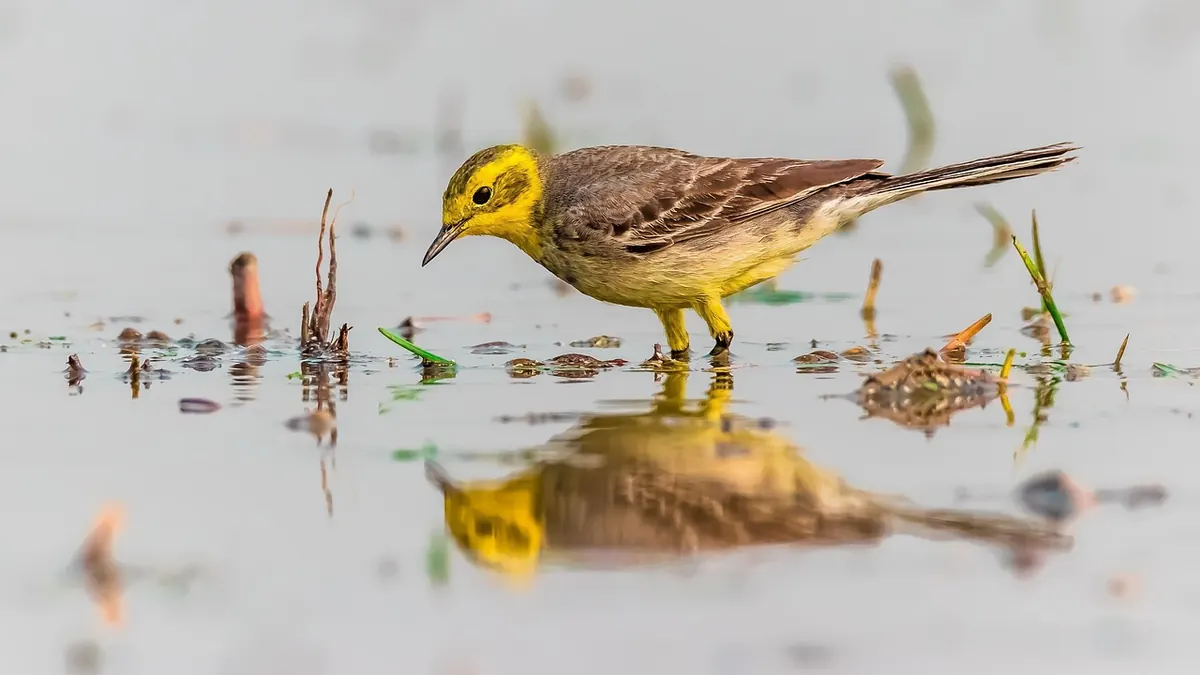
A barn owl working a rough grass margin at dusk is one of the great sights of the British countryside. Photographing it, though, is a different thing from getting close to it. The photographers who produce the best work here are rarely the ones with the biggest lenses; they are the ones the animals forget are there. What follows is the ground that matters: fieldcraft, protected species rules, the awkward question of baiting, and editing that tells the truth about what happened.
Ethical wildlife photography is not a personality trait, and it is not a moral high ground to be claimed. It is a series of small decisions, most of them made before you ever press the shutter: where you stand, how long you stay, whether you come back tomorrow. Get those decisions right and the pictures tend to look after themselves — and so does the subject.
Fieldcraft comes before cameras
Spend a few sessions on your local patch without a camera. Learn where the light falls at sunrise, which hedge the wrens use, how the tide moves a mudflat. Reading a place is a skill, and it is the one that separates a lucky shot from a reliable one.
It helps to pick one subject and one place, then go back obsessively. A suburban lake with a pair of great crested grebes will teach you more in a season than six weekends chasing rarities up and down the M6. You will learn that the grebes feed tight to the reedbed on a rising wind, that the male calls from the far bank in early March, and that the best light is the twenty minutes after the sun clears the rooftops. That is fieldcraft, and no lens can buy it.
When you do take the camera, make yourself boring to look at:
- Arrive early and settle before the animals are active. The first ten minutes after you sit down are the noisiest you will ever be.
- Keep the wind in your face where you can. Scent travels further than sound.
- Wear dull colours, avoid rustling fabric and strong repellent, and silence your phone.
- Use natural cover — a hedge, a bank, a gatepost — or a bag hide. Sit still, then sit still for longer.
- Stay on paths and boardwalks. Crushed vegetation on dunes and heathland can take years to recover.
- When you must move, move slowly and in straight lines. Stop, let the animal settle, then carry on.
Learn field signs as well: pellets under a fence post, otter spraint on a boulder, chewed cones, a dust bath in dry soil. Signs tell you where to wait, which beats walking.
Distance is a technique, not a compromise
Long lenses exist so that you do not have to be close. A 500mm shot of a wary animal doing something natural will always beat a 100mm shot of a stressed one filling the frame. Cropping a well-composed image is cheap; crowding a nest is not. If your subject has changed what it is doing because of you, you are no longer photographing wildlife — you are photographing your own effect on it.
Read the animal, not the frame
Your subject will tell you when you have gone too far. Watch the change in behaviour rather than the number of metres between you.
- Alarm calls, chattering or mobbing.
- Freezing, crouching, or staring straight at you.
- A bird leaving a nest and not returning while you are in sight.
- Distraction displays — a lapwing or ringed plover feigning a broken wing.
- Repeated flushing, or an animal altering its route because of you.
- A seal sliding off a haul-out, or a deer breaking into a run that you caused.
- A whole flock lifting off the water at once, or prey animals looking up in unison.
Any one of those is your cue to back off — and not just by a step. Retreat the way you came, wait, and approach again later, or not at all. A bird pushed off a nest in cold rain may not return to it, and nothing you can photograph is worth a failed breeding attempt.
Before you press the shutter, ask what the animal has lost by your being here. If the answer is more than a few minutes of its attention, you have taken something rather than made something.
Know the law: protected species in the UK
The Wildlife and Countryside Act 1981 is the backbone of British wildlife law, and it is stricter than most beginners assume. All wild birds, their nests and their eggs are protected while the nest is in use, which means disturbance at or near a nest is an offence. For Schedule 1 species — barn owl, kingfisher, peregrine, osprey, red kite, little ringed plover and many others — the protection is tighter still: you need a licence from the relevant statutory body even to photograph them at or near a nest, and the offence can be committed by recklessness as much as intent.
- Schedule 5 animals — all UK bats, otter, hazel dormouse, great crested newt, natterjack toad, sand lizard, smooth snake, red squirrel and others — are protected against disturbance in their places of shelter as well as against killing and injury. Roosts and hibernacula are absolutely off limits.
- Badger setts are protected by their own legislation. Watching badgers from a respectful distance is fine; digging, blocking or interfering with a sett never is.
- Plants on Schedule 8, and many others besides, must not be uprooted or picked without permission — and "picked" includes that orchid you wanted to tidy up in the background.
- Reserves, SSSIs, NNRs and country parks have their own bylaws and permit systems. A public footpath gives you a right to pass, not a right to disturb.
- Licences are issued by Natural England, NatureScot, Natural Resources Wales, and DAERA in Northern Ireland. Rules vary by country and change — always check current guidance rather than a forum post from 2014.
In practice, the safe approach is simple: use a long lens, a fixed hide placed days in advance, or a remote camera, and stay well clear of nests, setts, dens and roosts. If you are unsure whether your presence constitutes disturbance, the answer is to assume it does.
The baiting question
Baiting — putting out food to bring an animal within range — is the most divisive subject in British wildlife photography, and it deserves a straight answer rather than a shrug. At one end, filling a garden feeder is baiting and nobody sensible objects. At the other, live bait for birds of prey is illegal, indefensible and mercifully rare. In between sit mealworms for a kingfisher, dead day-old chicks for a tawny owl, fish for an otter and scraps for a red kite.
The ethics turn on the specifics, so ask:
- Does it make the animal dependent, or change its natural range or behaviour?
- Does it concentrate animals and risk spreading disease?
- Does it draw in predators — foxes, cats, rats — or put the subject near a road?
- Is the food appropriate and safe for that species, and given away from nests and roosts?
- Does it habituate the animal to people, which is usually a death sentence for a mammal near a town?
- Is it legal, and is it permitted on that site?
Playback, artificial light and flash at night, and the temporary movement of a bird or animal to a "better" perch all sit in the same category. Each can be done well; each can be done badly. If you would not be comfortable writing exactly what you did in the caption, that is your answer.
Editing that tells the truth
Post-processing is not cheating. Cropping, exposure, white balance, dust spots and tone curves are part of making a photograph. What crosses a line is making a picture of something that did not happen.
- Cloning out a stray twig is ordinary housekeeping. Cloning out a jess, a ring or a fence is misrepresentation.
- Combining two frames into one is a composite. Composite all you like — but label it.
- Do not chill, pin, move or handle a subject to get the shot. A butterfly on a fridge-cold leaf is not a wild butterfly.
- If the animal was captive, say so. "Taken at a wildlife park" is a caption, not a confession.
Honest captions protect everyone: the photographer's reputation, the viewer's trust, and the sensitive sites and species that depend on photographers behaving well.
A quick pre-shoot checklist
- Do I know which species I might encounter, and what protection they have?
- Do I have permission — landowner, reserve, or a licence if one is required?
- Have I planned a distance and an approach the animal will tolerate?
- Can I leave without being seen or heard, and without leaving a trace?
- Am I prepared to say exactly how the picture was made?
Get into those habits early and they become second nature. The reward is not just cleaner ethics on paper; it is better photographs. An animal that has forgotten you are there behaves like an animal — and that is the picture you actually wanted.
Photo: achintya_adhikari / Pixabay