Comparing Wildlife Ponds: Which Size and Style Suits Your Garden?
A pond is the most rewarding thing you can add to a garden for wildlife, and it doesn't have to be grand. A half-barrel sunk to its rim will pull in damselflies and give a frog somewhere to sit; a properly built wildlife pond will keep you watching for years. What matters is choosing a size and style that fits your space, your budget and the people — and pets — who share the garden.
There are three practical routes: a container pond, a lined pond you dig and line yourself, and a larger natural pond that copies what a field corner does. They differ in cost, upkeep, safety and wildlife value far more than most people expect.
Container ponds: small, cheap and quietly brilliant
An old half-barrel, a large ceramic planter, a stone trough or a sturdy trug will all work, provided it holds water and has no drainage holes. If it isn't watertight, line it with a piece of butyl or a rigid liner made for the purpose. Aim for something in the region of 100 litres or more, because small volumes swing in temperature quickly and are hard to keep balanced.
Plant it with two or three native marginals — water mint, lesser spearwort — add a bundle of oxygenating weed, and leave a stone or a piece of brick poking above the surface so insects can land and birds can drink. Keep fish out. In a container this size they will eat almost everything else and turn the water soupy.
Wildlife value is modest but real: damselflies, pond skaters, water beetles and the occasional frog. It won't usually produce a spawning colony, and in a hard winter the whole thing can freeze, but it is a genuine habitat rather than a decorative puddle. Cost is the lowest of the three, maintenance is a few minutes a week in summer, and a raised container is far safer around small children than anything dug into the ground.
Lined ponds: the flexible middle ground
This is what most people picture when they say wildlife pond. Mark out a shape with a hose pipe, dig it out, cut a couple of shallow shelves into the sides, then line the hole with underlay and a butyl or EPDM liner. One section around 60cm deep is plenty — deep enough to stay liquid through most winters — and at least one shallow shelf gives marginals somewhere to stand and birds a place to bathe.
The advantage of a flexible liner is that it fits around an awkward corner, a tree root or a slope. The disadvantage is that it is only as good as the installation. Sharp stones, exposed liner above the waterline and careless footwork cause most leaks, and fixing one usually means emptying the pond and starting again.
Upkeep is seasonal rather than constant. Pull excess blanketweed out by hand in summer, thin plants in autumn, and net out fallen leaves before they sink and rot. Never empty and scrub a wildlife pond: the sludge and the tiny invertebrates in it are the whole point.
Larger natural ponds: more stability, more commitment
With more space, a bigger pond — clay-lined, bentonite-lined, or sealed naturally with puddled clay — starts to behave like a proper wetland. Volume is stability. A large pond warms and cools slowly, algae blooms are gentler, and you can build in three distinct zones: a shallow marshy edge, open water, and a muddy margin for amphibians to move through. Dragonflies and damselflies need that scale, and great crested newts, where they already occur locally, do best in larger water with plenty of plants.
This is also the option with real practical implications. A large excavation may need permission depending on where you live, and if you rent you will need your landlord's agreement. In a conservation area, near protected trees, or over drainage and service runs, check with your local planning authority before anyone picks up a spade. Rules vary by site and by council, so treat general guidance as a starting point and confirm your own position with the council or a qualified local contractor.
Cost, upkeep and safety compared
- Cost: a container pond is cheapest, especially if you reuse something you already own. A lined pond costs more, mainly for liner, underlay and plants. A large natural pond is the priciest to build and may need machinery or specialist help.
- Effort to build: an afternoon for a container; a weekend or two for a lined pond; a project measured in weeks, or contracted out, for a large one.
- Maintenance: containers need topping up and a mid-summer clear-out. Lined ponds need seasonal leaf and blanketweed control. Large ponds look after themselves more, but the jobs are bigger when they come round.
- Safety: raised containers are safest around toddlers. Any sunken pond needs a sloping beach or ramp, and young children need constant supervision near water whatever its depth.
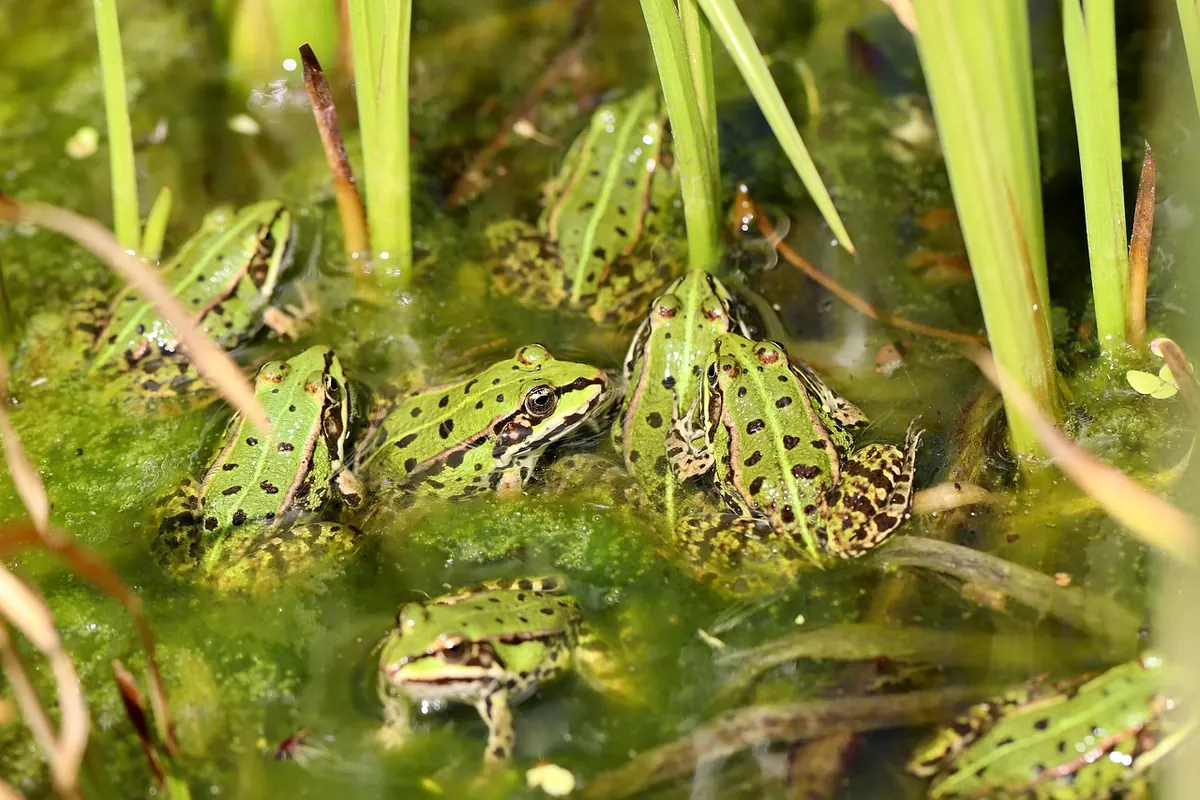
- Wildlife value: containers suit insects and drinking birds; lined ponds suit frogs, newts and the full range of pond insects; large ponds add dragonflies and a proper wetland edge.
Siting and planting: the decisions that matter most
Get the position right and everything else gets easier. Most pond plants and most pond wildlife want sun for at least half the day, so avoid deep shade. Keep the pond away from large trees: leaves fill it in autumn and roots can puncture a liner. Where you can, fill and top up with rainwater from a butt rather than tap water, which carries nutrients that feed algae.
Choose native plants — water forget-me-not, marsh marigold, hornwort — and avoid invasive non-natives such as floating pennywort, water fern and parrot's feather, which escape into the wild and cause real problems. Don't add fish to a wildlife pond; they eat tadpoles, larvae and just about everything else. And always build in an escape route: a gently sloping edge, a ramp of stones, or a piece of roughened wood trailing into the water. Hedgehogs, frogs and beetles all drown in steep-sided ponds that give them nothing to climb out on.
Choosing the pond that fits your garden
Work backwards from what you have. A courtyard, balcony or small patio is a container pond's natural home, and a well-planted barrel supports more life than most people imagine. A typical family garden with a bit of lawn or a border has room for a lined pond of two or three square metres, which is the sweet spot for frogs, newts and insects without becoming a project. A generous plot can take a larger pond in a quiet corner, which gives the most wildlife for the least intervention once the digging is done.
Whatever you choose, put safety first if there are small children or visiting grandchildren. A raised container, or a sunken pond covered with a sturdy grille, removes most of the risk; otherwise plan on supervision and an easy way out for
Photo: Nennieinszweidrei / Pixabay